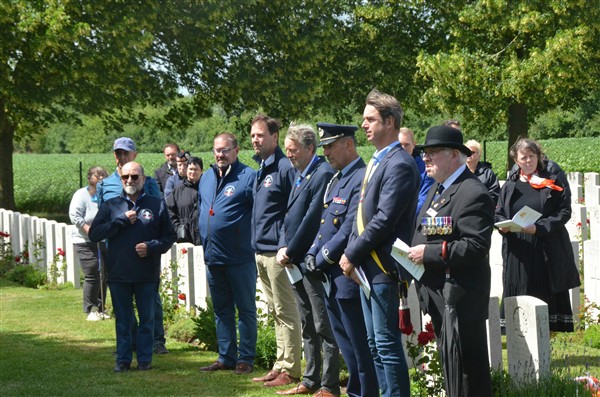
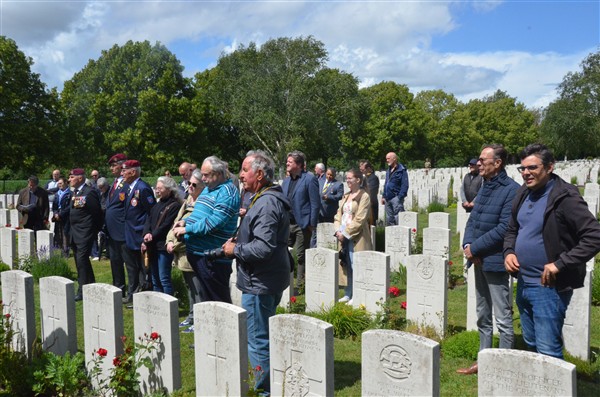
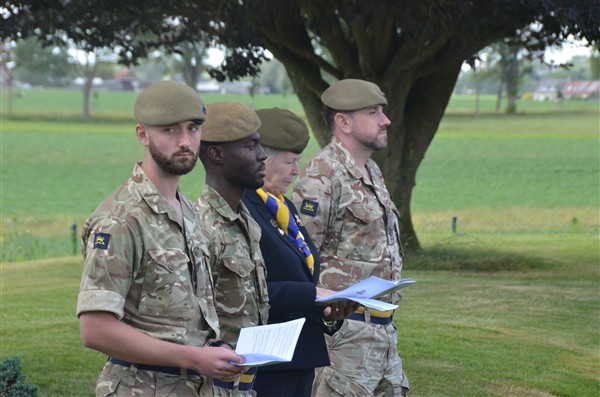
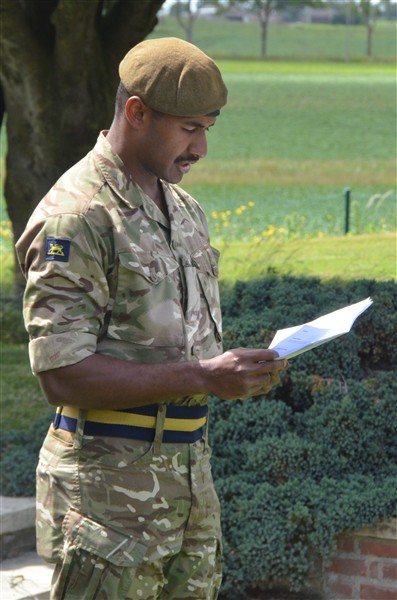
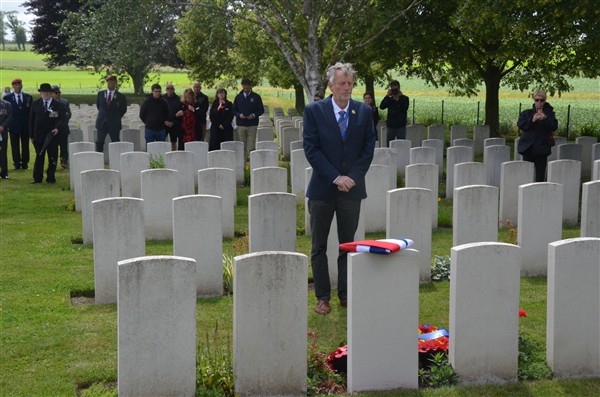
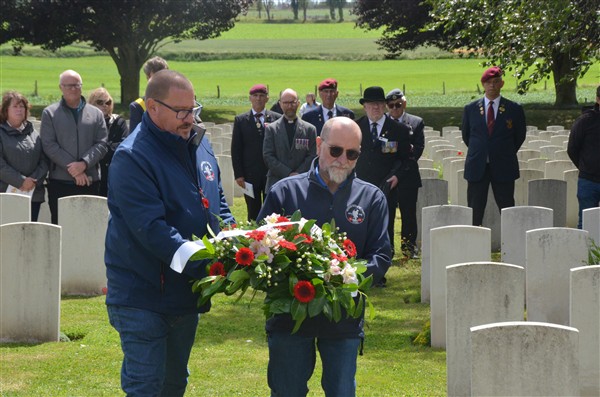
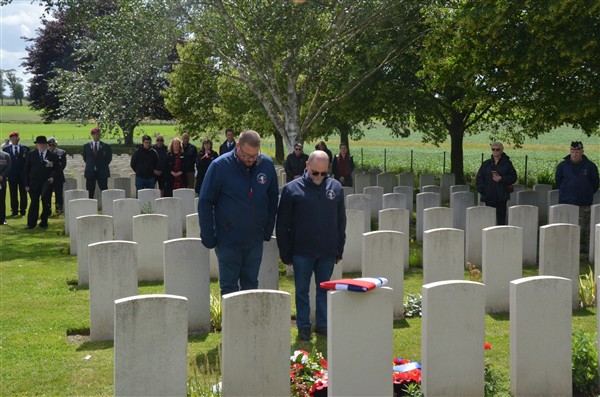
Please find below a number of pictures of the ceremony held at Zillebeke,
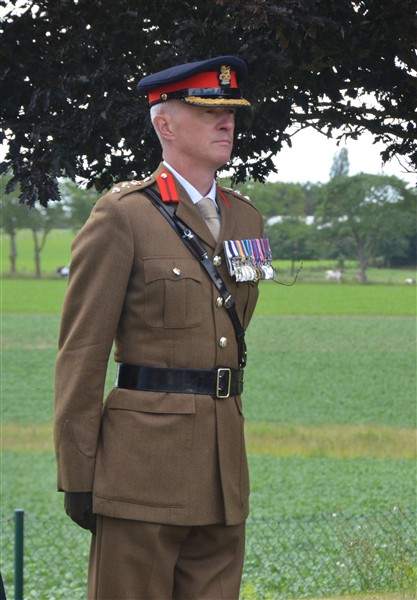
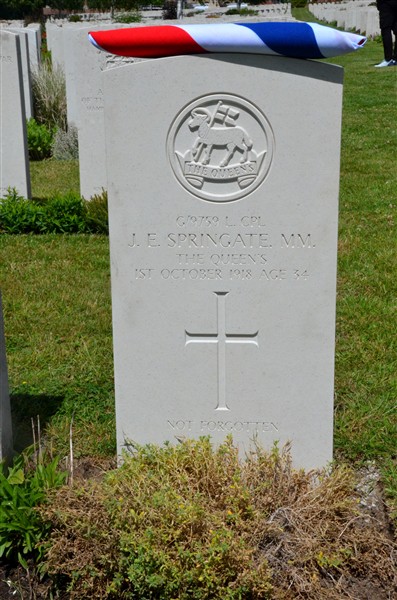
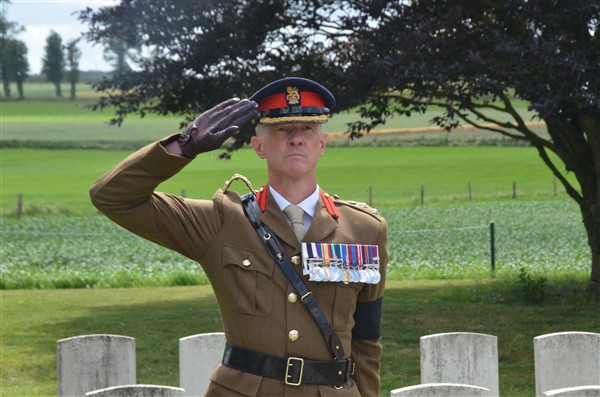
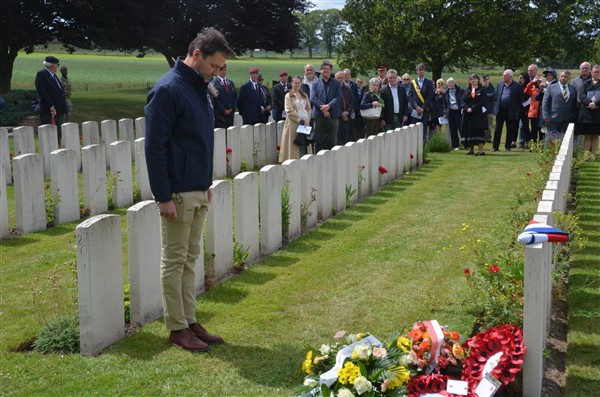
Hooge Crater Cemetery on Tuesday 9 June 2026. During this service Lance Corporal John Edgar Springate MM and Serjeant Ernest Albert Stevens got a new headstone with their name as research now has indicated that they had been buried there as an unknown soldier.
In late September 1918 the 11 Queen's Royal West Surrey Regiment took up a position east of Voormezele, before moving up to Klein Zillebeke ahead of an attack towards the Wervicq-Comines railway. At dawn on the morning of 1 October the battalion were ordered to march to the Ypres - Menin Road via Ten Brielen. That evening they launched an attack towards the Wervicq - Menin railway. They advanced around 1500 yards before coming under heavy machine gun fire from a nearby chicory field. Losing the light, and having suffered significant casualties the battalion halted their advance and dug in for the night. Further casualties were incurred during the move towards an assembly point. From 1 - 2 October 1918 the 11 Battalion lost 36 men, 15 of whom remained missing following the war - their names were listed on the Tyne Cot Memorial at Passendale. John Edgar Springate and Ernest Albert Stevens were two of these men.
Following the end of the war, the remains of an unknown sergeant of the Queens regiment were recovered south-west of Gheluwe and north-east of Wervicq. In a separate recovery the remains of an unknown lance corporal of the Queens regiment were recovered just south of Gheluwe and north-east of Wervicd - near or astride a track connecting the roads between Reeke and Gheluwe, and Wervicq and Klijtmolen. Both men were identified as to their rank and regiment, but their personal identity remained unknown - leading them to be buried in graves marked simply 'Known to God'. Now, archival research has revealed that the unknown Serjeant was Ernest Albert Stevens, and the unknown Lance Corporal was John Edgar Springate. Their graves have now been rededicated, returning their names to them and honouring their sacrifice.
.jpg)
The service was conducted by Reverend (Major) Adéle Rees CF, Chaplain to 1
st Battalion, THe Princess of Wales's Royal Regiment.
.jpg)
John Edgar Springate was born in Lambeth on 2 May 1884 - the fifth of thirtheen children born to William Springate and his wife Martha Ann Tiley. William was a general labourer during John's early years, but later became foreman in a timber yard. Sadly, six of John's siblings died in infancy or early childhood. In 1901, at the age of 16, John was working as an iron monger's assistant, and he carried this career on until his enlistment in the army.
John's service record hasn't survived to tell us about his army career, nor his war service, but his medals indicate that he first saw active service somewhere after the beginning of 1916. He seems to have served his whole time as part of the Queen's Royal West Surrey Regiment. On 28 September 1917 his name appeared in the London Gazette announcing that he had been awarded the Military Medal (MM) - this seems to have been for an expedition with 2Lt Darlington in which they laid tapes to mark the forming up spot for the battalion during an impending attack - they came under heavy fire whilst doing this.
.jpg)
.jpg)
Reverend Richard Clement, St. George's Memorial Church
.jpg)
Michiel Vermaercke who did the research and said some words on behalf of the Springate family.
.jpg)
.jpg)
The Exhortation
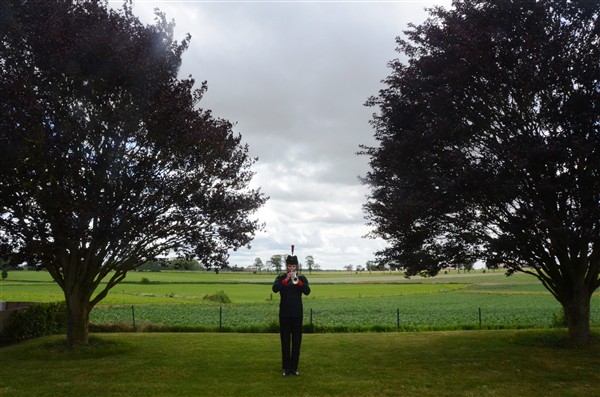
The Last Post, one minute of silence and the Reveille
.jpg)
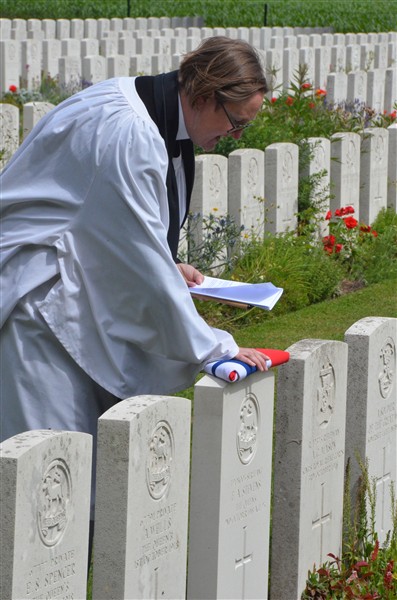
Blessing of the grave of Lance Corporal John Edgar Springate MM
.jpg)
.jpg)
.jpg)
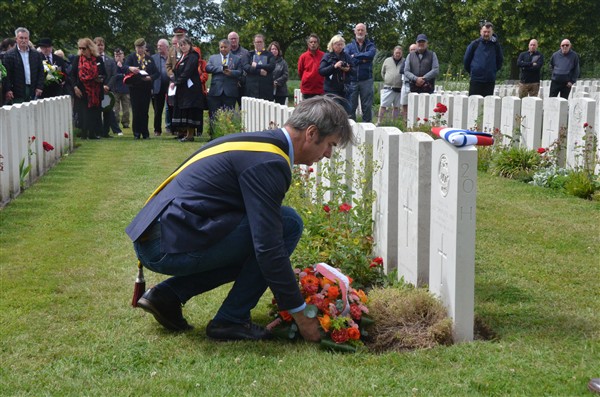
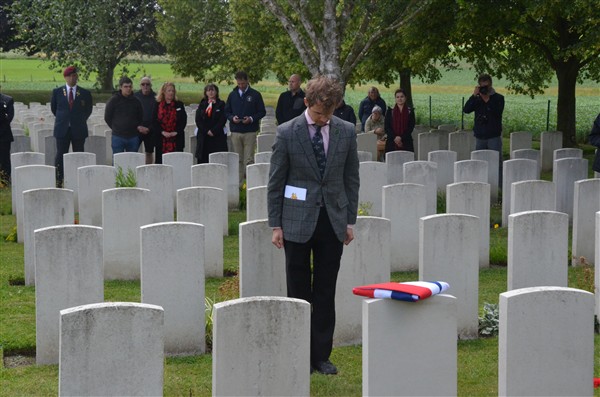
Laying of the wreaths
.jpg)
.jpg)
.jpg)
.jpg)
.jpg)
.jpg)
.jpg)
.jpg)
.jpg)
.jpg)
The grave of Serjeant Ernest Albert Stevens
Ernest was born in the summer of 1895 in Buckingshire - the oldest of eight children born to Frederick Stevens, a French Polisher (furniture trade) and his wife Emily Vere. By 1911, the family were living in West Wycombe and Ernest was working in the same industry as his father, tough he was trained as an upholsterer rather than a polisher.
Ernest's service reocrd hasn't survived to tell us about his army career nor his war service, but his medals indicate that he first saw active service sometime after the beginning of 1916. He seems to have enlisted at Aylesbury, and served with the Oxfordshire and Buckinghamshire Light Infantry before transferring over to the Queen's Royal West Surrey Regiment.
.jpg)
.jpg)
.jpg)
Blessing
Laying of the wreaths
.jpg)
.jpg)
.jpg)
.jpg)
.jpg)
The chapel of the Hooge Crater Museum is now under restoration.
.jpg)
Page made by WO1.be / Greatwar.be.