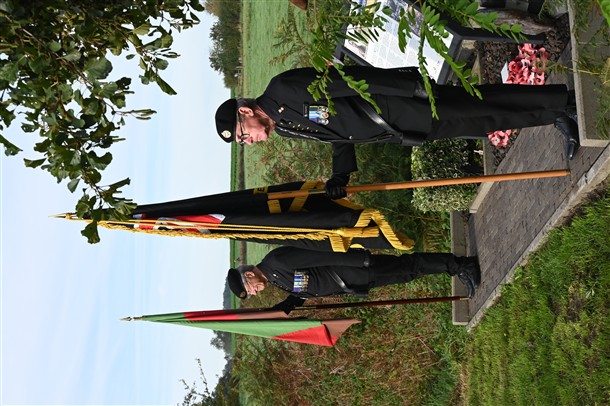
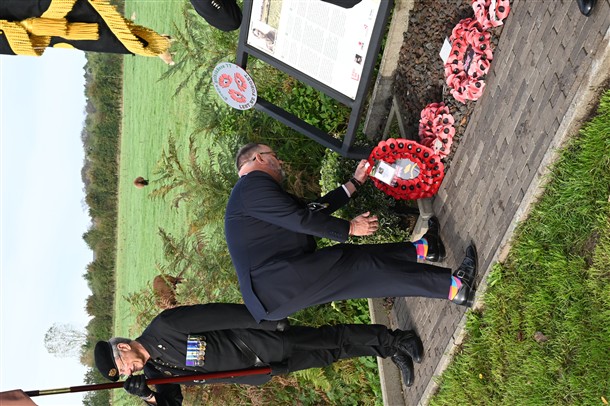
On Oct. 3rd. the Friends of the Tank Memorial Ypres salient commemorated and paid ribute to the man of the Tank Corps who fell in the October actions in the Ypres salient during 3rd Ypres (aka Passchendaele). A three part ceremony it was. This deals with part 1 & 2 of the day.
part 1 - It started in the morning with a ceremony at Robertson's Bridge at the Reutel hamlet where Captain Clement Robertson was killed while leading his tanks through the muddy battlefields on Oct. 4th 1917. Captain Clement Robertson was awarded the VC for his brave action. He so was the first member of the Tank Corps to be (posthumously) awarded the Victoria Cross.
on 4 October 1917 No. 12 section of the 1st Battalion of the Tank Corps was allotted to the 54th Infantry Brigade of the 21st Division, for the attack on Juniper Wood and the hamlet of Reutel, east of the infamous Polygon Wood. From September 30th till October 4th Captain Clement Robertson had worked without a break. He and his orderly, Gunner Cyril Sheldon Allen, taped the route from Observatory Ridge to Stirling Castle and then to Black Watch Corner, under heavy shell fire. He managed to direct his Tanks to the frontline, under very trying circumstances.
Four tanks of the 12th section left from Black Watch Corner. One tank was knocked out by a German shell three minutes after leaving the starting point. The three other tanks followed the road along Polygon Wood. Limited visibility combined with the lack of landmarks in the devastated landscape made it very difficult for the tanks to find their way. Captain Robertson, well aware of this risk, led the tanks on foot towards Cameron Covert and the Joist Farm area, where the Infantry had been held up. He continued to lead his tanks towards their objectives, despite the tanks facing heavy German fire. Thanks to Captain Robertson, all three tanks reached their objectives. They provided great assistance to the infantry by knocking out fortified German positions, along the way, that were holding up the advance. The No. 12 Section tanks were vital to the success of the attack.
Captain Clement Robertson, aged only 26, was killed by machine-gun fire near the bridge over the Reutel stream while leading his tanks with the first wave of infantry. The bridge was renamed Robertson's Bridge in 2017.
.jpg)
.jpg)
.jpg)
.jpg)
Part 2 - at the Tyne Cot Memorial
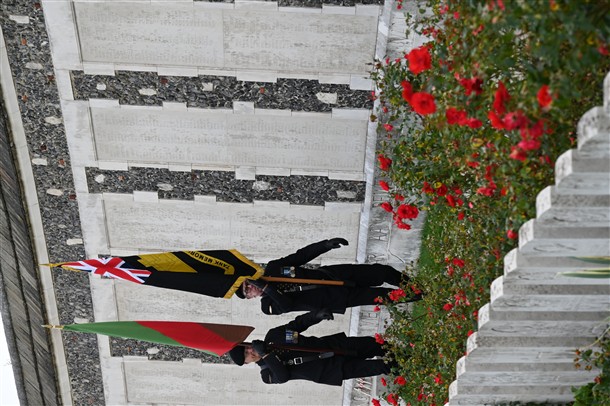
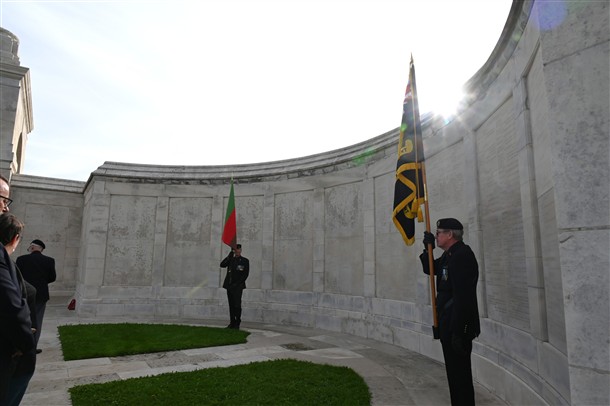
At The Tyne Cot Memorial, the story was told of the Tank Corps actions of Oct 'th and Oct. 9th with a focus on these fallen men of the Tank Corps:
Private Thomas Bellamy served in the 12th Section of 1st Bn of the Tank Corps during the First World War. He was wounded in action earlier but recovered, only to be killed in battle on
October 4, 1917, during the heavy fighting at Reutel, the action in which also his commander Captain Clement Robertson VC was killed. Capt. Robertson we commemorated this morning at the bridge named after him, at the battlefield where he was killed and where
Private Bellamy was killed and still
may me buried still somewhere. The boy is commemorated at the Tyne Cot Memorial.
.jpg) Also the story of Captain Frederick Charles Talbot,
Also the story of Captain Frederick Charles Talbot, Tank Section Commander of D Battalion of the Tank Corps,
October 9, 1917, at (Battle of) Poelcappelle.
Before serving with the newly formed armored units, Talbot was a highly experienced veteran. He fought as a cavalryman in the Boer War and entered France in August 1914 as a Sergeant Major with the 4th Royal Irish Dragoon Guards. He later received a commission into the Royal Berkshire Regiment before transferring to the Heavy Branch of the Machine Gun Corps (which became the Tank Corps).
On October 9, 1917, during the assault near the Belgian village of Poelcappelle, the battlefield condition was a quagmire of deep mud. Talbot's tank came under intense fire and was completely destroyed. The action that day however was very successful.
His commanding officer, Major William H. L. Watson said:
“One of the section commanders disappeared after the tank he was travelling in was destroyed. This was Captain Frederick Talbot... I never had a better section commander... It had been a day of desperate tragedy. We had failed, and to me, the sense of failure was inconceivably bitter... And we mourned Talbot.”
.jpg)
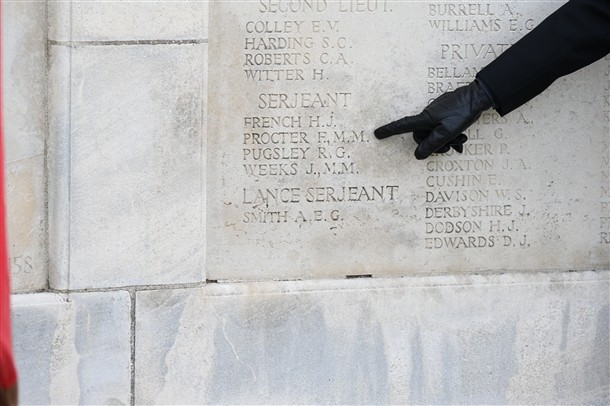
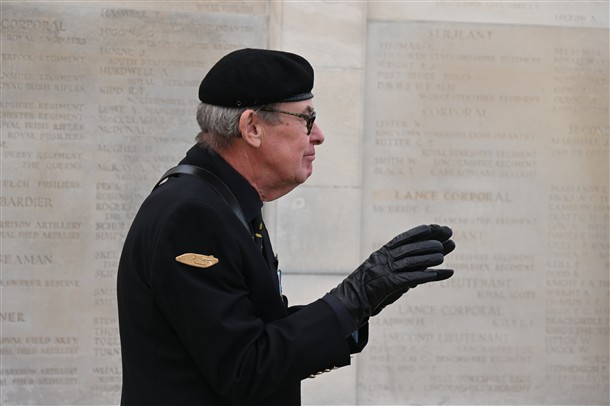 THe story of Serjeant Frederick Procter (MM)
 who was born in 1884 and who before the war worked as a bank clerk and served in the City of London (Roughriders) Imperial Yeomanry. At the outbreak of war, Fred was embodied for service as a lance sergeant, promoted to sergeant on 5th Oct 14. He served on the Home Front and showed exemplary character. Discharged on 9th March 15. Enlisted with the Navy on 11th March 1915 for duration of hostilities. He probably served at Gallipoli too. When his unit was disbanded, he joined the Army and served in the Machine Gun Corps (S/N 2939), with whom he was awarded the Military Medal earlier for coolness and courage under heavy fire, and indicating targets on 9 April 1917 during the attack on Neuville-Vitasse. Subsequently he was transferred to the Tank Corps with 'D' Battalion.
He was killed in action on 4 October 1917, aged 33. This happened during operations in the Ypres Salient (Passchendaele area), when his tank (D5) sank in a shell hole and came under heavy fire near the crossroads of Ieperstraat and Langemarkstraat.
.jpg)
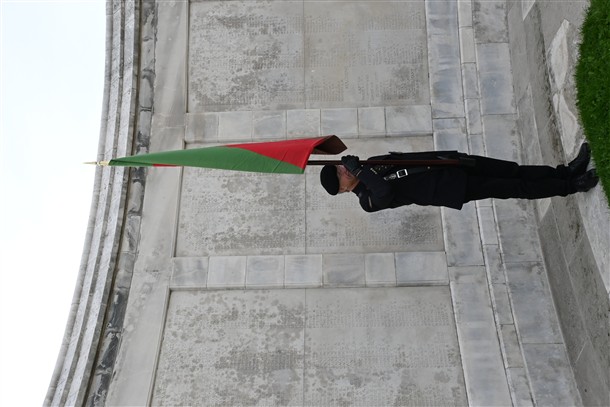
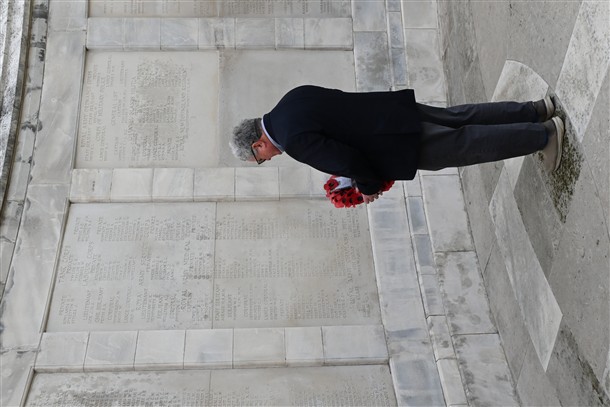
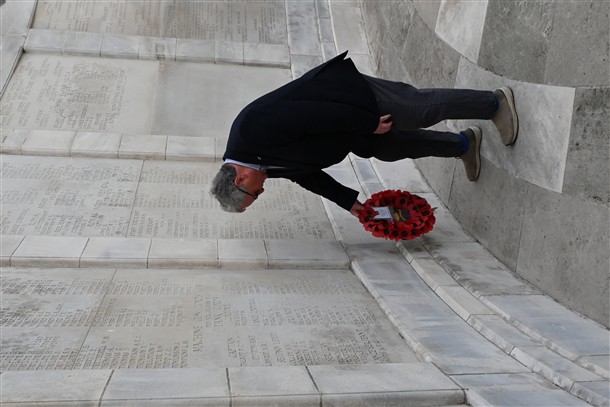
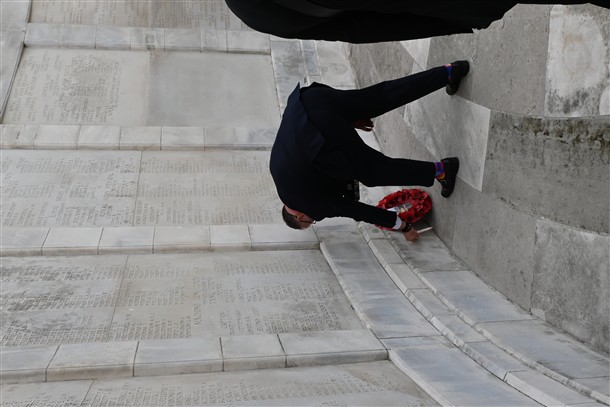
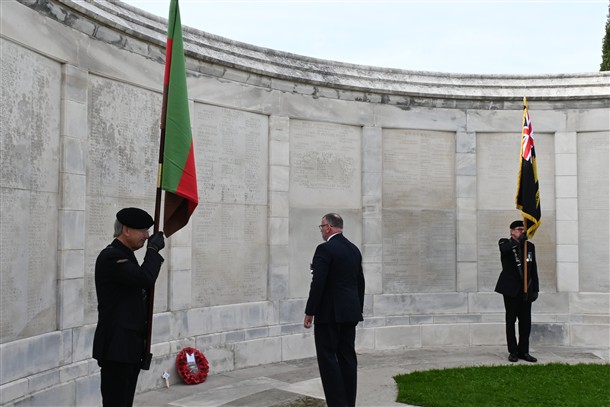
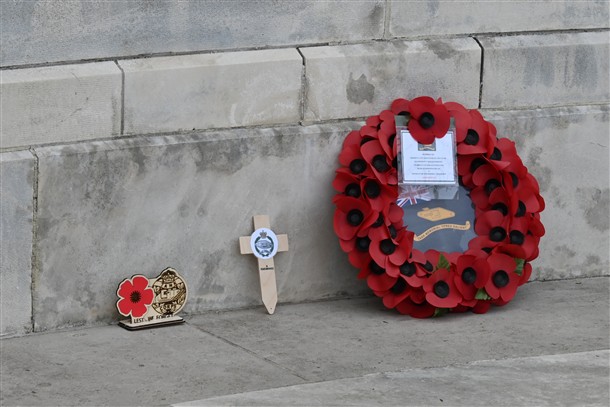
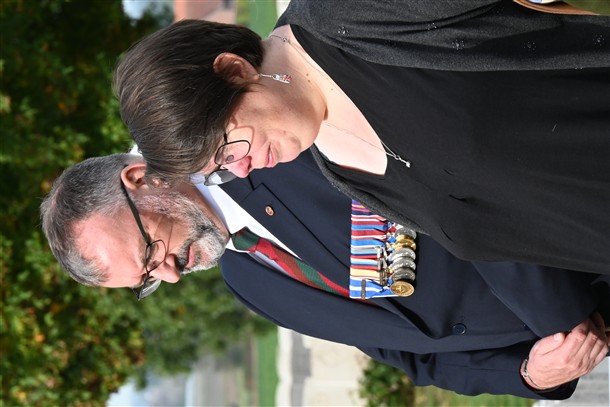
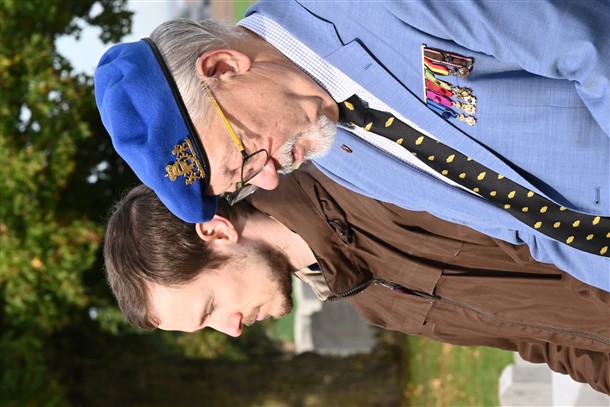
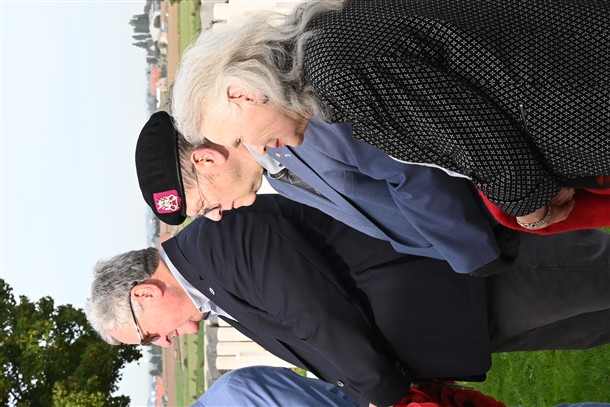
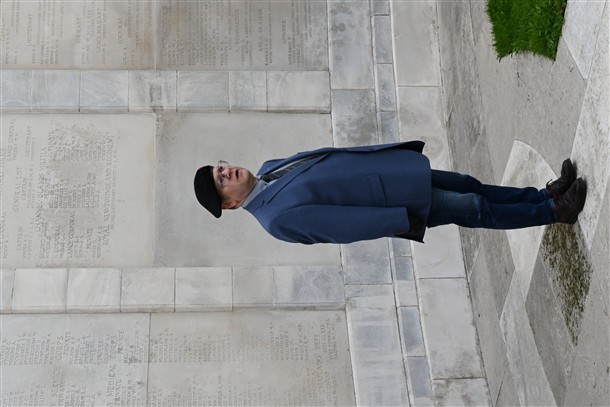
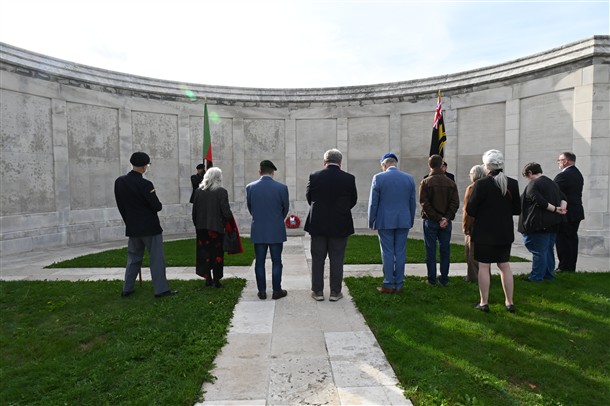
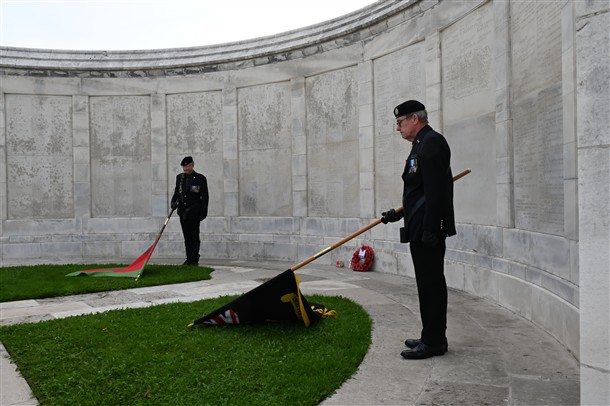
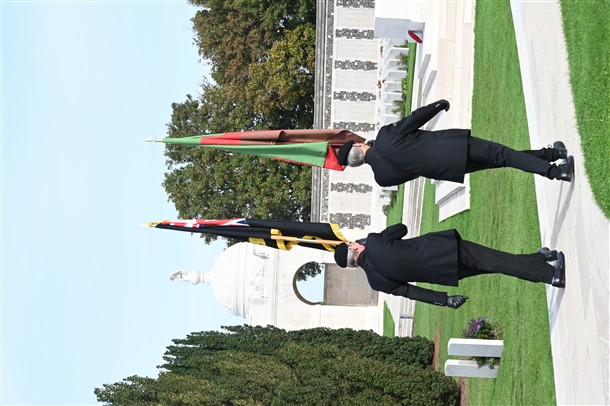
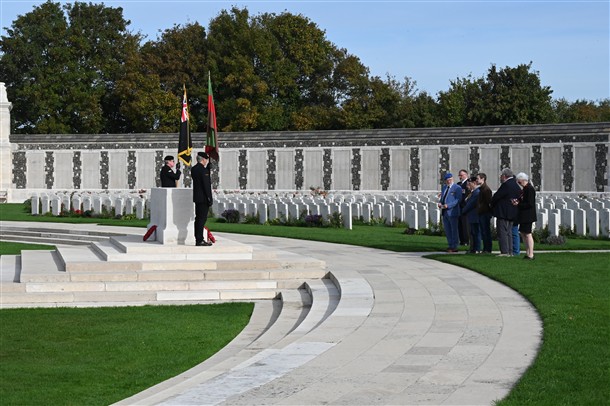
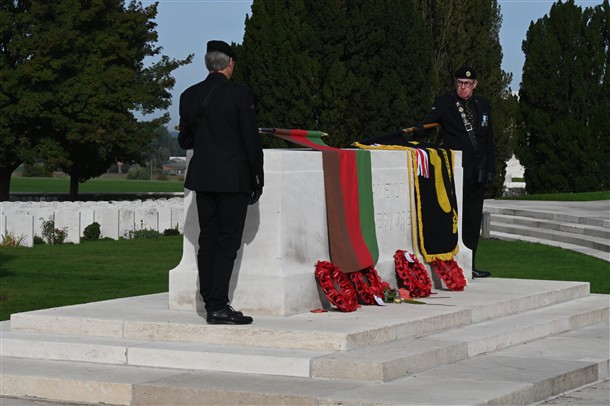
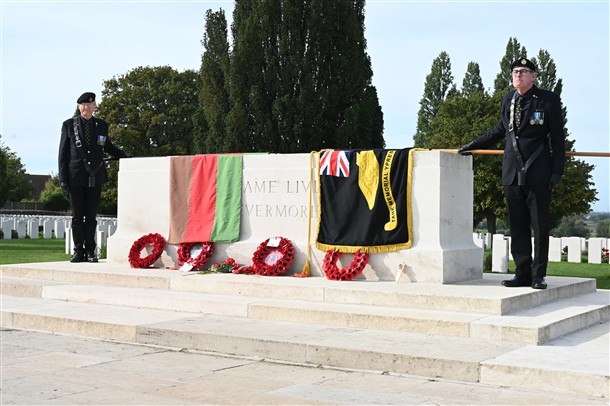
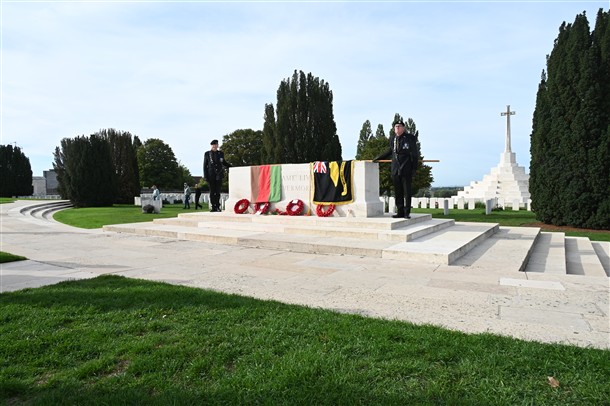
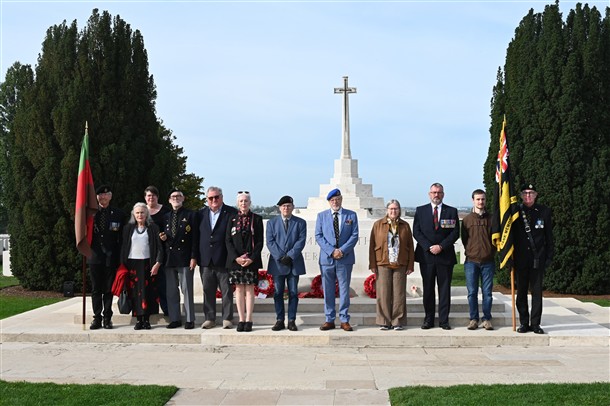
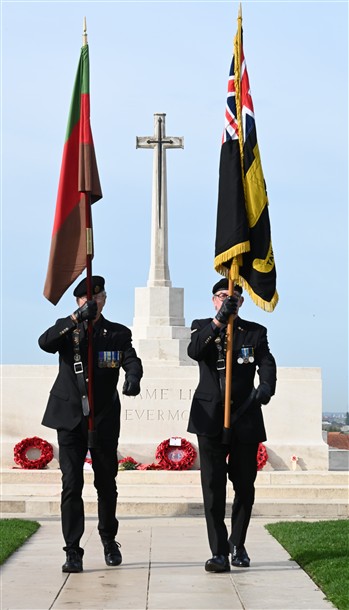
The tribute was completed with a moving ceremony at the Stone of Remembrance.
page made by Frank Mahieu