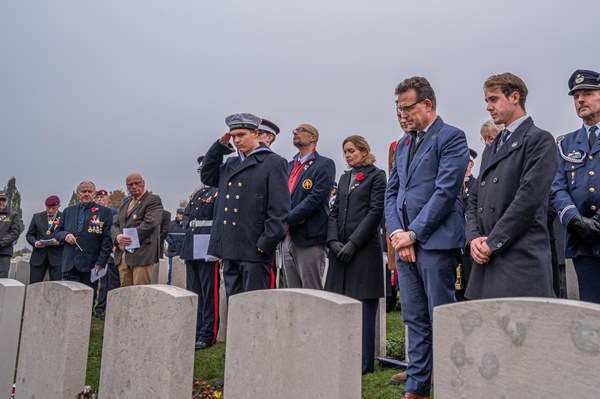
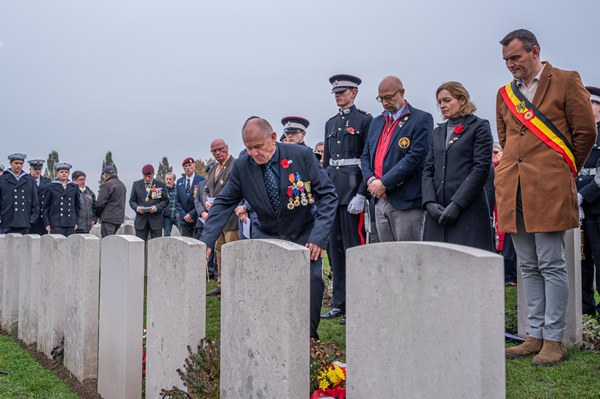
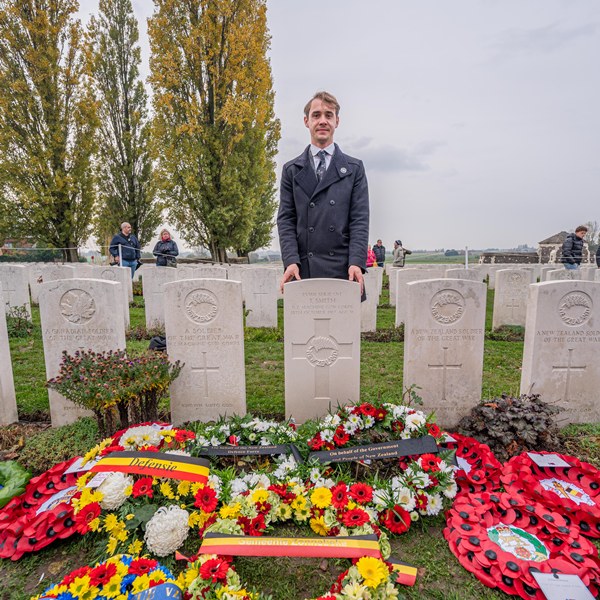
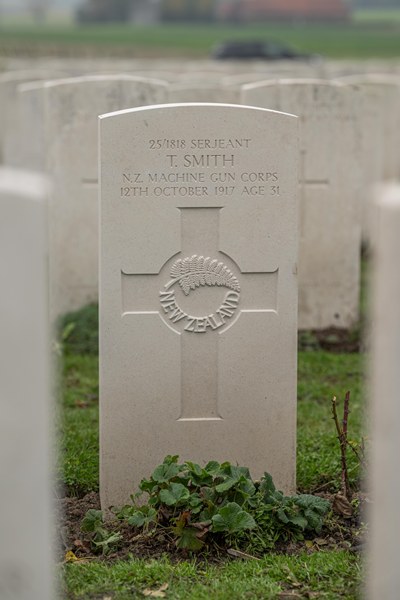
On Friday 6th November 2026, a rededication service took place for Sergeant Thomas Smith. Recent research has now led to the identification of this grave, previously marked as that of an ‘unknown’ soldier of World War 1. The service took place at
Tyne Cot Cemetery at Passendale.
Thomas Smith – the Serviceman.
Serjeant, 25/1818, New Zealand Machine Gun Corps, No. 2 Coy., who died on 12 October 1917, aged 31, has long been commemorated on the Tyne Cot Memorial, West-Vlaanderen, Belgium. Today we rededicate his grave.
Born on 15 October 1885 in Alverstoke, Gosport, Hampshire, the only son of John Smyth and Catherine née O’Donovan. His father had been a Private in the 9th Regiment of Foot (the East Norfolk Regiment) who served for 22 years and 5 months, including the Jowaki Expedition in India in 1877, before being discharged on 11 May 1880. He worked as a Magazine Labourer in Alverstoke before he died on 9 December 1893. His mother had previously been widowed in 1879, with three children of her own from that marriage and his half-brother Edward Cotter who was later killed on 10 January 1941, whilst at home in Portsmouth during an air raid aged 72, being commemorated as a WW2 Civilian War Death by CWGC.
Thomas was admitted to the Duke of York Royal Military School on 30 August 1895 (Petition No. 10794) and recorded “Withdrawn” on 12 August 1899, having been “Detained off pass”. His school record was chequered and included regular punishments for neglecting his duty, as well as for “Letting off fireworks in the playroom”, “Shouting in the dining room” and “Breaking a broom”.
The 1901 Census recorded a man with his name and place of birth serving in the Royal Navy as a Domestic 3rd Class aboard HMS Majestic, a pre-dreadnought battleship, in Gibraltar, with his stated age being 19. It is very likely this was Thomas and he had falsified his age to enlist as an adult, despite only being 15 at the time of the Census.
On 28 February 1902, he enlisted as a Private in the Militia with the 3rd Battalion, Hampshire Regiment claiming to be 19 years and 2 months and working as a Servant, with reference made on his service record at having left Royal Navy ‘Domestic’ service at his own request. However, his Army career was to be short, attending the annual camp from 9 June to 5 July 1902, then being struck off strength when he failed to attend the annual camp in 1903.
The reason for missing that camp was that he subsequently re-enlisted in the Royal Navy as a Boy 2nd Class on 31 October 1902 and was an Able Seaman when he was dismissed on 2 October 1910 following 90 days’ Hard Labour for theft and receiving stolen money. His record in the Royal Navy Registers of Seamen’s Services, 1848-1939 gave his date of birth of 17 January 1885 but with his later New Zealand service record referring to “8 Years Seaman Torpedoman” we can be sure it is the same Thomas Smith, likely needing to change his date of birth because of his prior, undeclared service in the Militia.
The 1911 Census recorded him as a Seaman boarding in the Sailors’ Home on Oxford Street, Southampton but by 1914 he was living in Lyttleton, Canterbury, New Zealand, at Hill’s Boarding House and still working as a Seaman according to Electoral Rolls.
He subsequently was working as a Merchant Seaman for the Canterbury Steam Ship Company when he enlisted in the New Zealand Army in Christchurch, New Zealand on 29 November 1915 and served first with G Company, 11th Reinforcements and then C Company, 4th Battalion, New Zealand Rifle Brigade. He embarked for Suez, Egypt on 1 April 1916 by which time he was a Corporal and later served in France, being admitted to hospital on 16 September 1916 with a gunshot wound to his right arm. He reverted to Lance Corporal and joined the New Zealand Machine Gun Corps on his return from hospital, being promoted to Serjeant by January 1917 and going overseas with the 5th Company on 21 May 1917 (CWGC incorrect states 2nd Company).
By 12 October 1917 he was serving in Flanders, Belgium and his unit took part in the attack on Bellevue Spur by the New Zealand Division, against what was seen as the last obstacle in capturing the village from which the Battle of Passchendaele later took its name. The day was to become the bloodiest in New Zealand’s history, with over 843 killed in action which included Thomas, now known to have been killed in the vicinity of YETTA HOUSES when the advance had been held up. His body was thought not to have been recovered, common with many who fell in the deep mud at Passchendaele and he was subsequently commemorated on the Tyne Cot Memorial.
The Public Trust Office, New Zealand, identified three nominated next of kin: Mrs C Smith (mother) and Mr E Cotter (probable half-brother), both of 60 Havant Street, Portsea and Mrs S K Hobbins (perhaps his sister) of Charing Cross, London. Unfortunately subsequent investigations have not been able to identify further descendants. However, we are delighted to have both senior representatives and current pupils of his school with us here today.
A total of 1796 New Zealand soldiers died during the Passchendaele offensive in 1917. The vast majority were killed on 12 October 1917, during the Battle of Passchendaele, a day remembered as New Zealand’s “Darkest Day” when up to 846 young men were killed in a matter of hours.
Sergeant Thomas Smith was one of these men.
For the Duke of York’s Military School, he is also a “Lost Boy” whose name had been omitted from the memorial tablets in the school chapel.
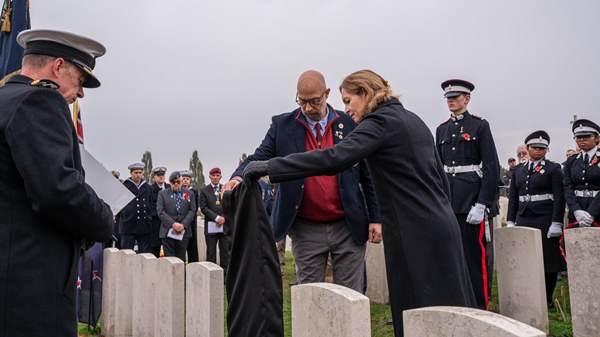
Unveiling of the new headstone.
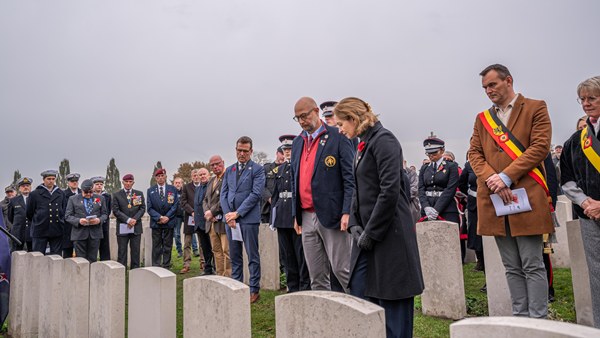
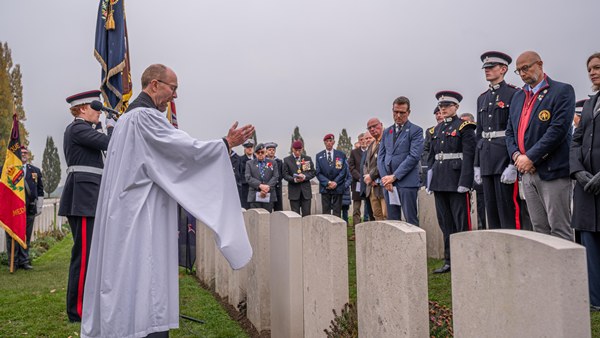
The service was conducted by Reverend Richard Clement, St. George's Church Ieper.
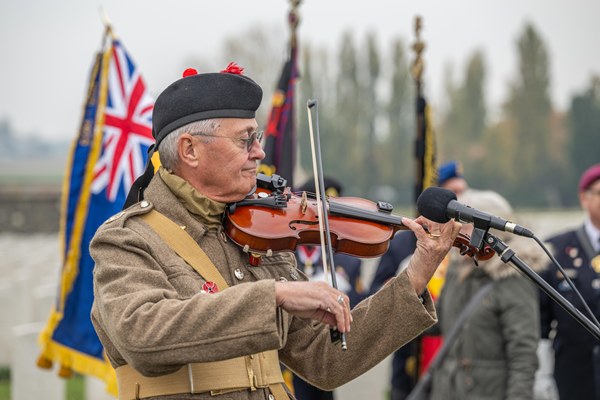
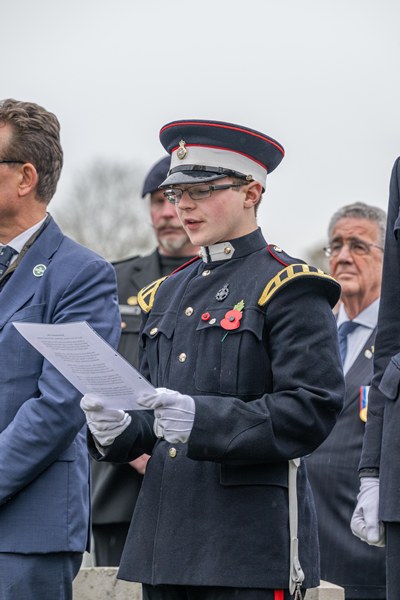
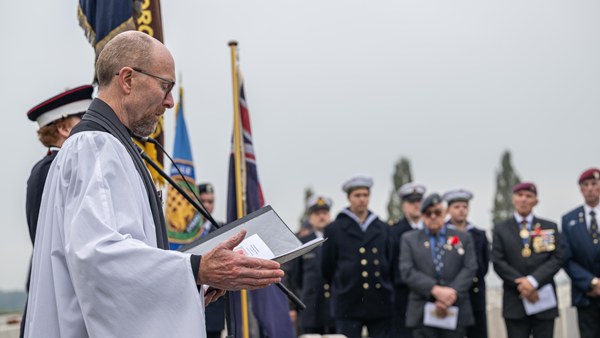
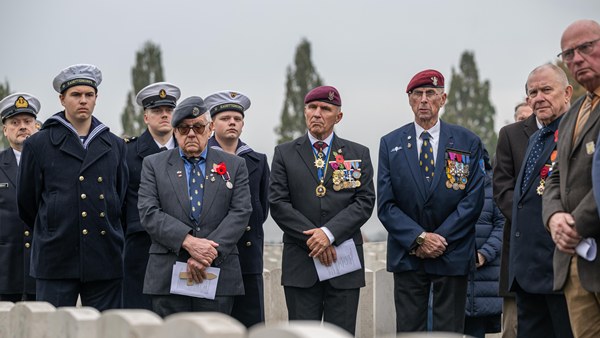
The Last Post
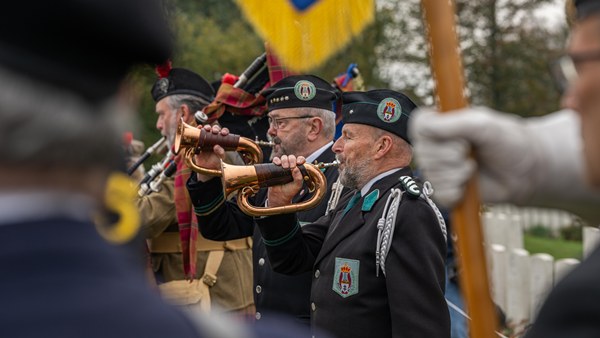
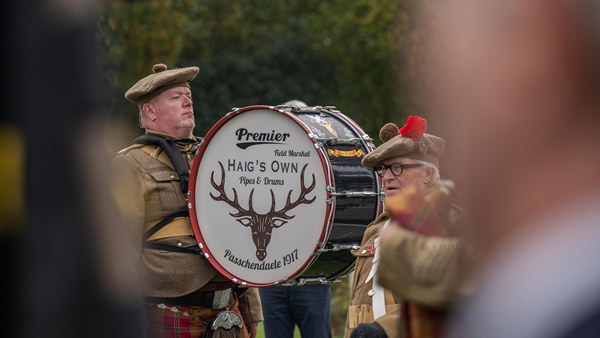

Laying of wreaths
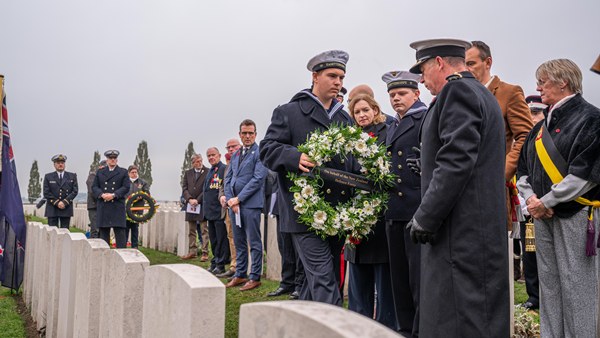
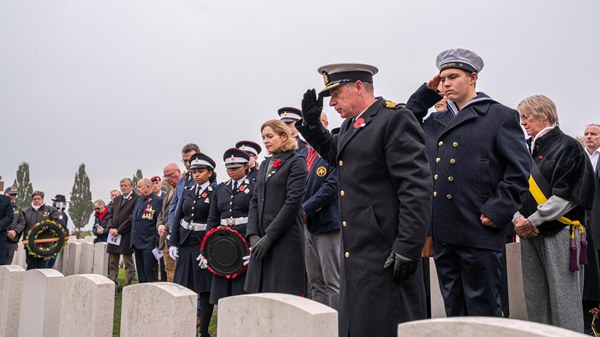
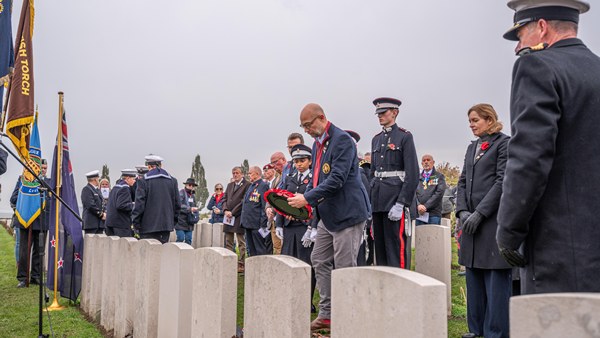
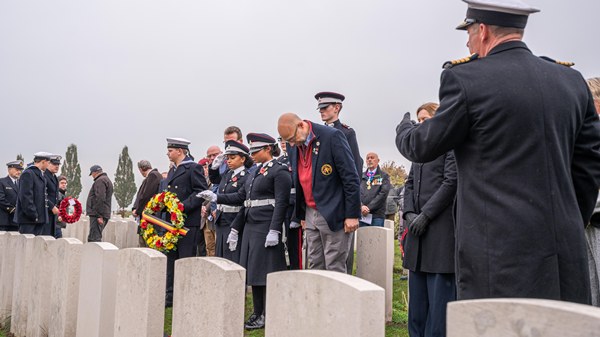
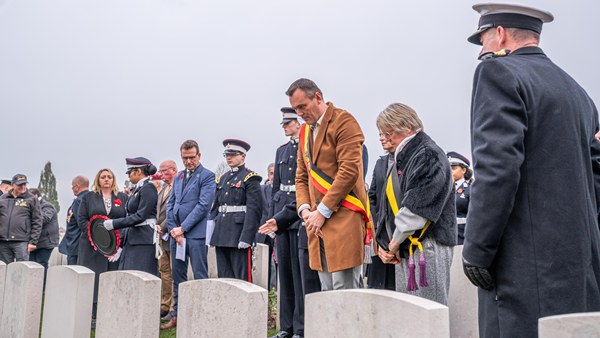
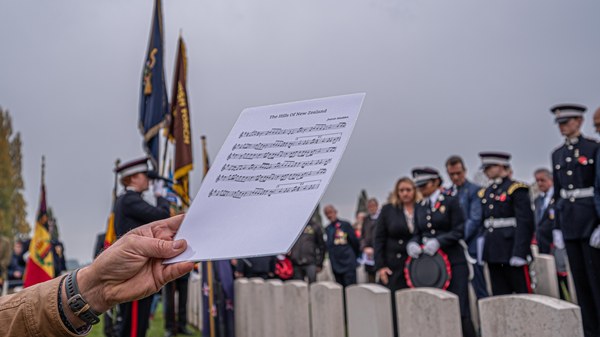
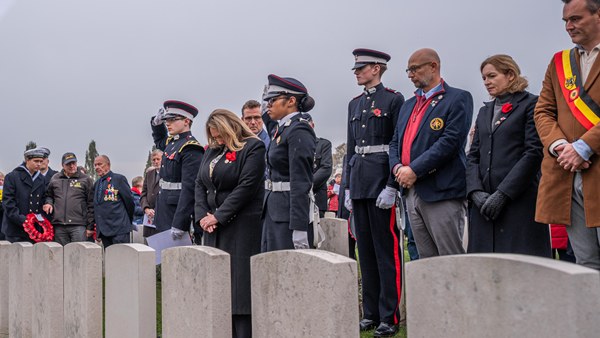
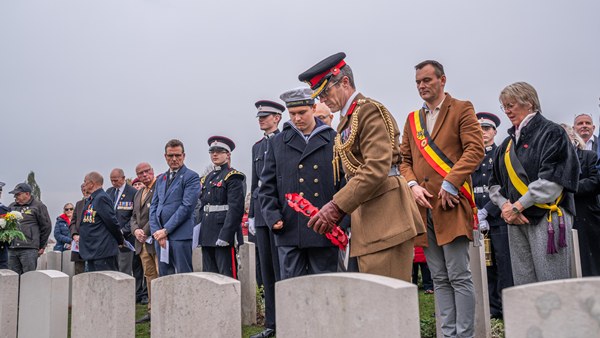
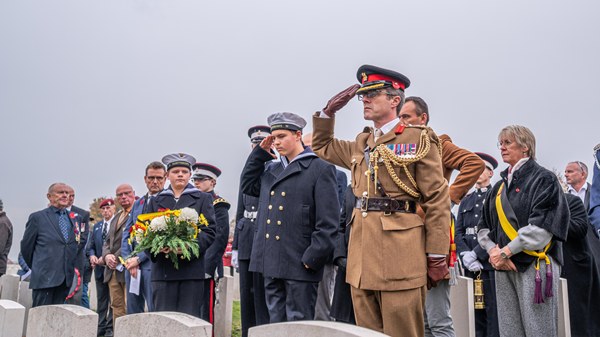
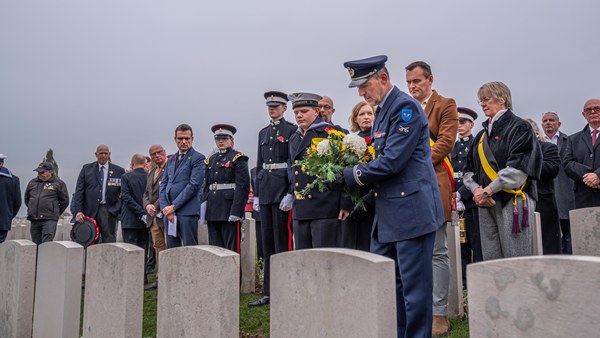
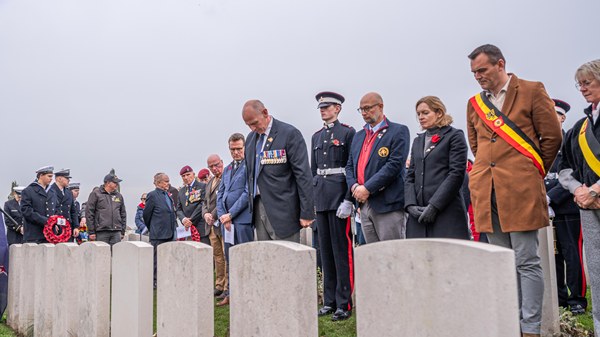
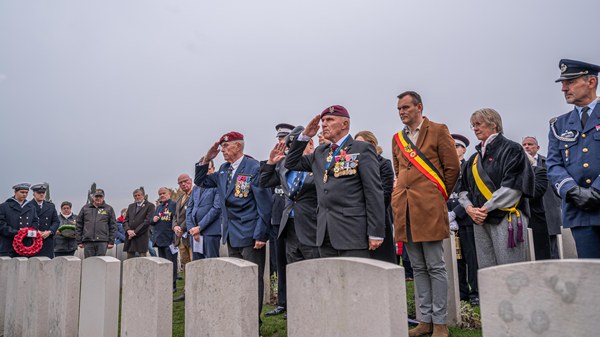
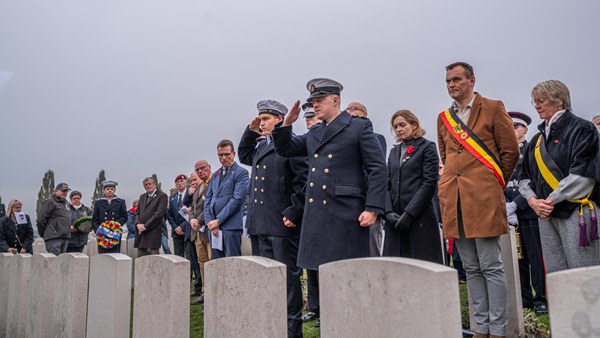
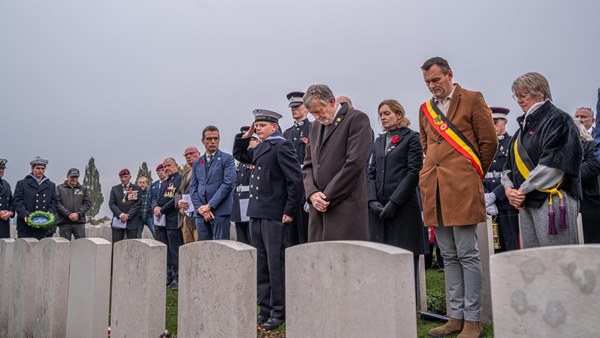
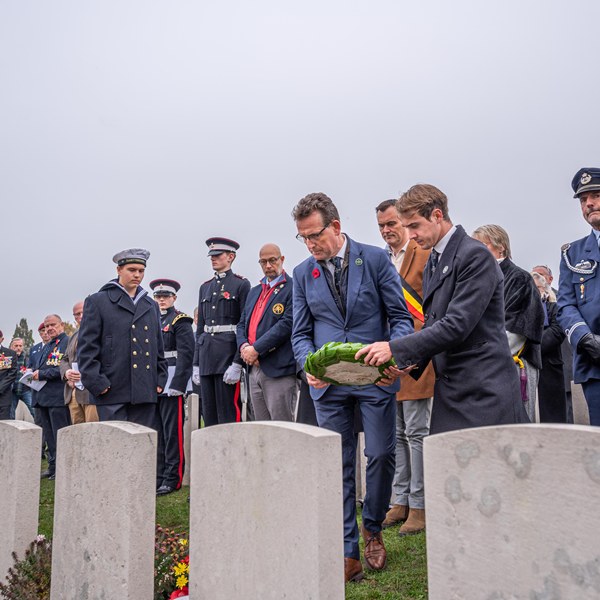
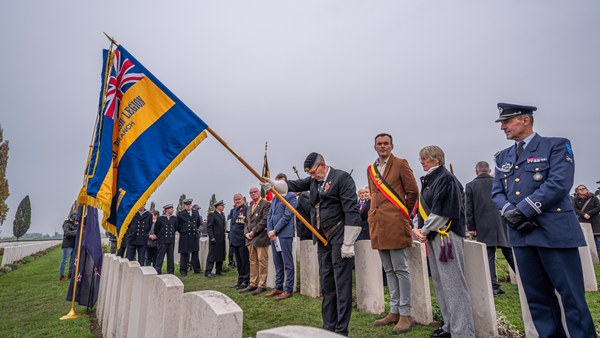
Greeting by the standard bearers.
Michiel Vermaercke who did the research to identify this soldier.
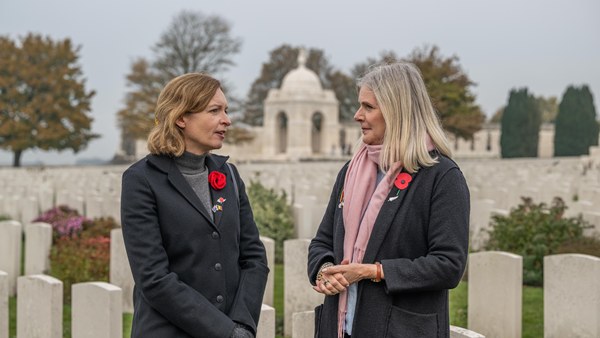
Ambassador Jennifer Troup of New Zeland talking to
Jude Dobson who made a documentary on this soldier.
Page made by WO1.be / Greatwar.be - Foto's/Pictures Eric Compernolle.